Top Digital Marketing Trends to Watch in 2026
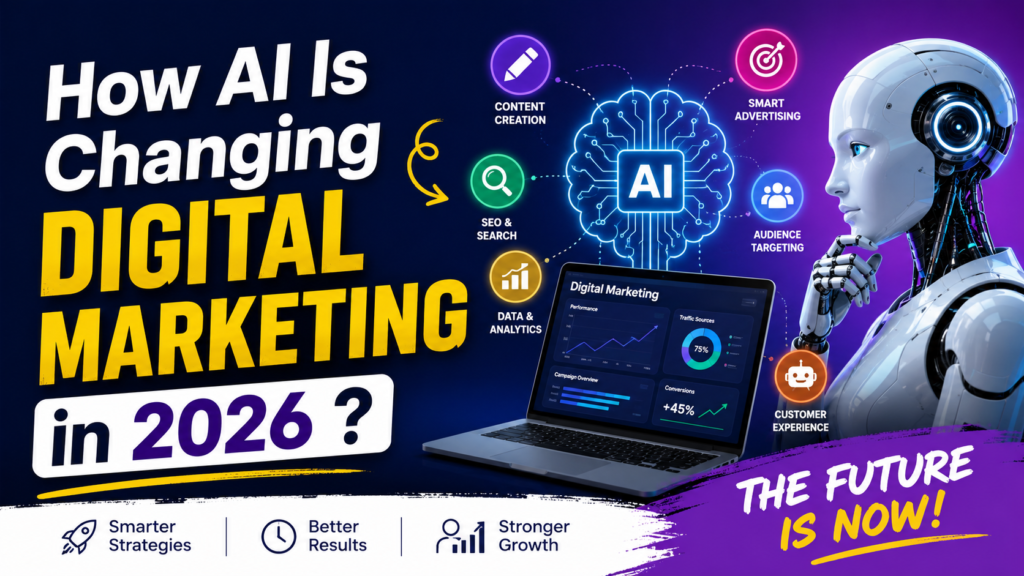
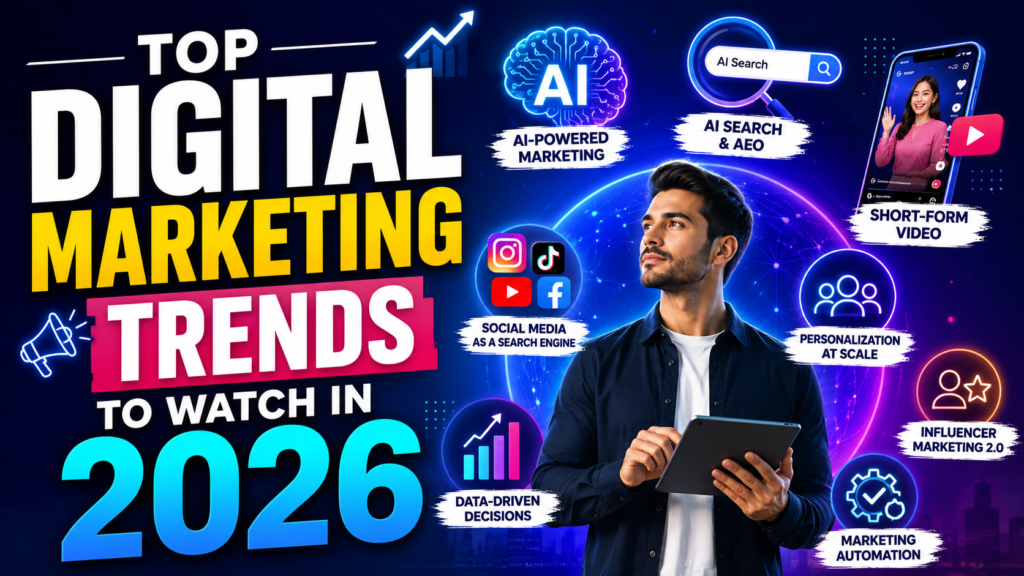
Digital marketing is changing faster than ever. New technologies, changing customer behavior, artificial intelligence, and evolving social media platforms are transforming the way businesses attract, engage, and convert customers. In 2026, businesses can no longer depend only on traditional SEO, social media posts, or paid advertising. They need to understand where customers are searching, how they consume content, and how technology is influencing their buying decisions. Google’s 2026 marketing outlook highlights AI-driven consumer behavior, conversational search, visual content, community participation, and changing consumer expectations as major forces shaping marketing. Here are some of the top digital marketing trends to watch in 2026. 1. Artificial Intelligence Becomes a Marketing Essential AI is one of the biggest trends in digital marketing in 2026. Businesses are using AI to create content, analyze customer behavior, automate repetitive tasks, generate advertising ideas, personalize campaigns, and improve customer service. AI can help marketers save time and produce content more efficiently. For example, marketers can use AI to brainstorm blog topics, create social media captions, write email drafts, analyze campaign data, and develop video concepts. However, successful marketers will not simply publish AI-generated content. Human creativity, experience, originality, and brand personality remain important. The best strategy is to use AI for efficiency and humans for creativity and strategy. 2. AI Search and AEO Are Changing SEO Search is becoming more conversational. Instead of typing short keywords, users are increasingly asking detailed questions and expecting direct answers. Google’s AI Mode has surpassed one billion monthly users globally, and Google reports that AI Mode queries have more than doubled each quarter since its launch. This means businesses need to think beyond traditional SEO. Answer Engine Optimization (AEO) and Generative Engine Optimization (GEO) are becoming important concepts. The goal is to create authoritative, useful, well-structured content that can be understood and referenced by AI-powered search experiences. Businesses should focus on: Google is also introducing features that help users discover original content and trusted sources within AI Search. 3. Short-Form Video Continues to Grow Short-form video remains one of the most powerful ways to attract attention online. Instagram Reels, YouTube Shorts, and other short-video formats allow businesses to communicate their message quickly and creatively. In 2026, simply creating videos is not enough. Businesses need to create content that provides value, entertainment, education, or a strong point of view. For example, a digital marketing professional could create short videos such as: Short videos can also be repurposed across multiple platforms, helping businesses get more value from one piece of content. 4. Social Media Is Becoming a Search Engine People are increasingly using social platforms to discover businesses, products, services, creators, and information. This means marketers need to optimize social media content for discoverability, not just engagement. Using relevant keywords in captions, video titles, profiles, and on-screen text can help users find content when they search within social platforms. For example, instead of using a caption such as “Today’s marketing tip 🚀,” a marketer could use: “5 Digital Marketing Tips for Small Businesses in 2026.” The second option clearly communicates the topic and can potentially reach people searching for digital marketing advice. 5. Personalization Will Become More Important Customers don’t want to feel like they are receiving the same generic message as everyone else. AI and customer data are making personalization easier. Businesses can analyze customer behavior and provide more relevant content, product recommendations, emails, and advertisements. For example, an online store can recommend products based on previous browsing behavior, while an email campaign can provide different messages to new customers and existing customers. The future of digital marketing will increasingly focus on delivering the right message to the right person at the right time. 6. Authenticity and Human Content Will Stand Out As AI-generated content becomes easier to produce, the internet will contain more generic content. This creates an opportunity for businesses that provide something AI cannot easily replicate: real experience. Original case studies, customer stories, personal opinions, behind-the-scenes content, expert advice, demonstrations, and real-world examples can help brands build trust. In 2026, businesses should not only ask, “Can AI create this content?” They should also ask: “What unique experience or knowledge can we add?” That human element can make content more memorable and credible. 7. Influencer Marketing Is Becoming More Strategic Influencer marketing is evolving from celebrity endorsements toward creators, experts, and niche communities. A business doesn’t always need a creator with millions of followers. A smaller creator with a highly relevant audience may generate better engagement and trust. For example, a local fitness business might benefit more from working with a fitness creator in its city than from hiring a massive international influencer. The focus is shifting from follower count to relevance, trust, engagement, and conversions. 8. First-Party Data Will Become More Valuable Privacy changes and increasing dependence on third-party platforms are encouraging businesses to build audiences they can communicate with directly. Email lists, CRM databases, customer accounts, communities, and permission-based messaging channels can become valuable marketing assets. Instead of depending entirely on Instagram, Google, or another platform to reach customers, businesses should build their own audience. This creates a more sustainable marketing strategy and gives businesses greater control over customer relationships. 9. Marketing Automation Will Save More Time Automation is becoming increasingly important for businesses of all sizes. Marketers can automate tasks such as email sequences, lead follow-ups, appointment reminders, customer segmentation, reporting, and social media workflows. When combined with AI, automation can help businesses respond faster while reducing repetitive manual work. However, automation should improve the customer experience rather than make communication feel robotic. 10. Measuring ROI Will Matter More Than Vanity Metrics Likes, views, and followers can be useful indicators, but they don’t always represent business success. In 2026, businesses should focus more on metrics such as: A campaign with 10,000 views and zero customers may be less valuable than a campaign with 2,000 views that generates 50 qualified leads. The future of digital marketing will therefore be increasingly data-driven and results-focused. Conclusion Digital marketing in