
In 2026, paid advertising is one of the most effective ways for businesses to reach potential customers online. Two of the biggest advertising platforms are Google Ads and Meta Ads, which includes advertising across Facebook and Instagram.
Both platforms can generate leads, sales, website traffic, and brand awareness, but they work in very different ways. Google Ads primarily helps businesses reach people who are actively searching for a product or service, while Meta Ads can help businesses reach people based on their interests, behaviors, demographics, and online activity.
So, which platform is better for your business in 2026? The answer depends on your business goals, target audience, budget, product, and marketing strategy.
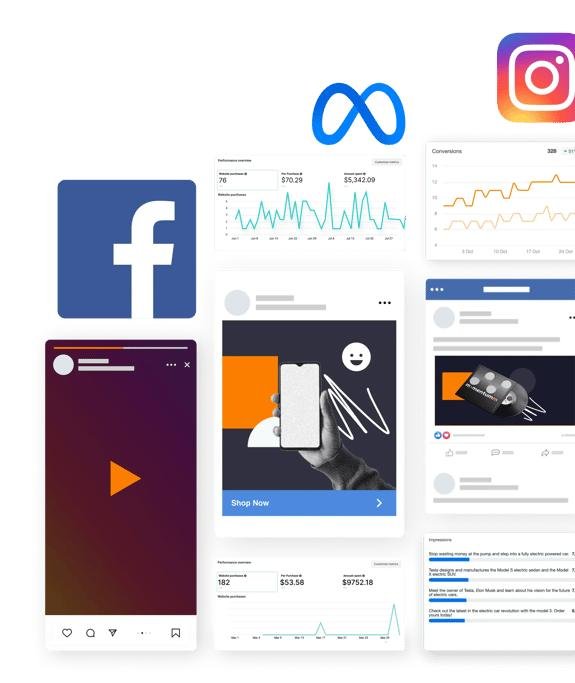
1. How Google Ads Works
Google Ads is largely based on search intent. When someone searches for something such as “best digital marketing agency in Mumbai” or “buy running shoes online,” businesses can show advertisements related to that search.
This makes Google Ads particularly useful when customers already know what they want.
For example, imagine someone searches for “AC repair near me.” A local AC repair company can use Google Ads to appear when that person is actively looking for an AC repair service.
Google also offers other advertising formats, including display, video, shopping, and app campaigns. This allows businesses to reach potential customers at different stages of the buying journey.
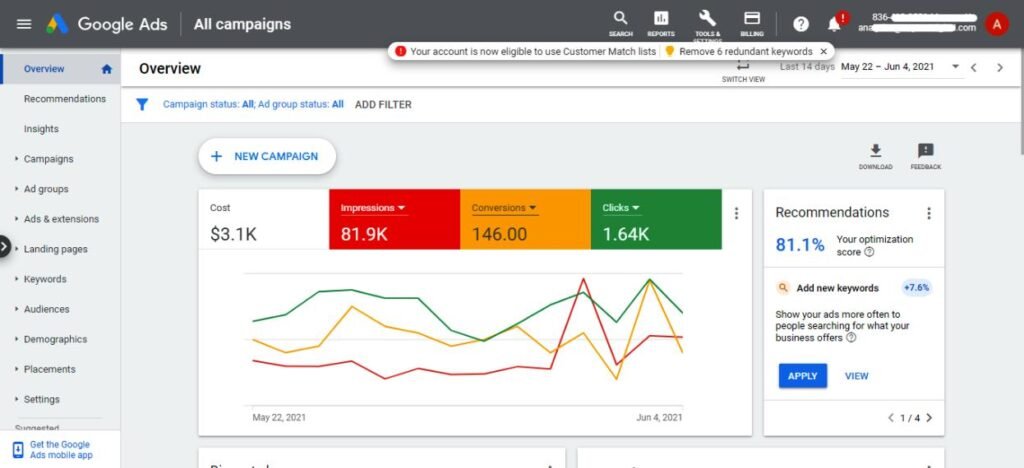
2. How Meta Ads Works
Meta Ads operates differently. Instead of primarily waiting for people to search for a product, businesses can place ads in front of users based on audience and campaign signals.
Ads can appear across platforms such as Facebook and Instagram.
Meta is especially powerful for visually attractive products and services. Businesses can use images, videos, Reels, Stories, carousels, and other creative formats to capture attention.
For example, a fashion brand can show a new collection to people who are likely to be interested in fashion. A restaurant can promote a special offer to people in a particular geographic area.
Meta’s Advantage+ features also use automation and machine learning to help advertisers optimize campaign delivery.
3. Google Ads vs Meta Ads: Search Intent
One of the biggest differences is customer intent.
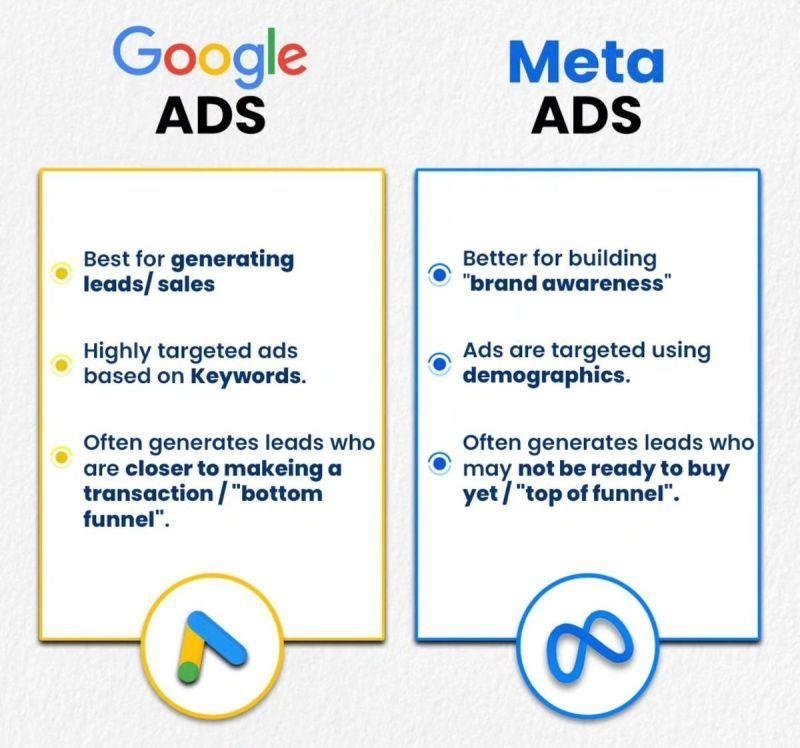
Google Ads is often stronger when customers are already looking for a solution.
For example:
“Buy iPhone 17 online”
“Best dentist in Ahmedabad”
“Digital marketing course near me”
These searches indicate that the person may already be interested in taking action.
Meta Ads can be better for creating demand. Someone may not be actively searching for a product but could become interested after seeing an engaging advertisement.
Therefore, Google often works well for high-intent demand capture, while Meta can be excellent for demand generation and discovery.
4. Which Platform Is Better for Lead Generation?
Both platforms can generate leads, but the better choice depends on the type of business.
For businesses where customers actively search for services, Google Ads can be highly effective.
Examples include:
- Lawyers
- Dentists
- Plumbers
- Digital marketing agencies
- Real estate services
- Repair services
- Coaching institutes
Meta Ads can work particularly well when the offer can be presented visually or when businesses want to reach a specific audience.
Examples include:
- Fashion brands
- Beauty businesses
- Fitness businesses
- Restaurants
- Online courses
- E-commerce brands
- Lifestyle products
The quality of the landing page and follow-up process also matters greatly. Getting clicks is not enough—you need to convert those visitors into customers.
5. Google Ads vs Meta Ads for E-Commerce
For e-commerce businesses, both platforms can be powerful.
Google Ads can capture people who are already searching for specific products. Product-focused campaigns can help businesses appear when shoppers are comparing products or looking to buy.
Meta Ads can help introduce products to potential customers through visually engaging content. Businesses can use product images, videos, testimonials, creator-style content, and promotional offers to generate interest.
For many e-commerce businesses, using both platforms together can be more effective than choosing only one.
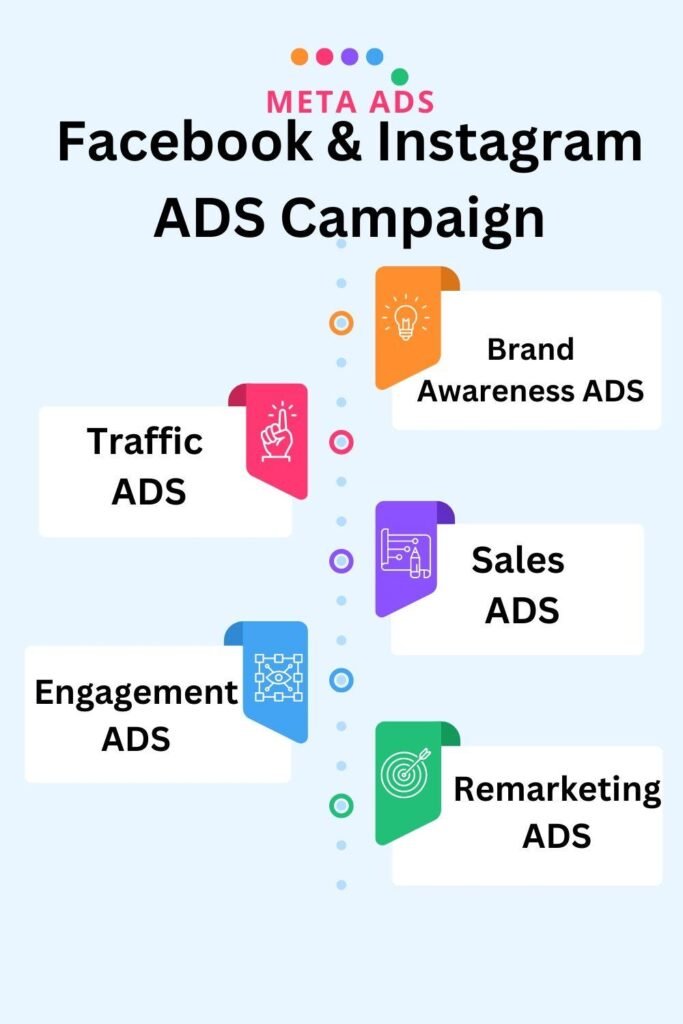
6. Which Is Better for Brand Awareness?
If your primary goal is brand awareness, Meta Ads can be a strong option because of its visual and social environment.
Businesses can create short videos, Reels, Stories, carousel ads, and other creative campaigns to introduce their brand to new audiences.
Google can also support awareness through YouTube, Display, and other campaign types.
The important difference is that Meta can be especially useful for interrupting the user’s feed with creative content, while Google Search is often focused on responding to an existing search.
7. Which Platform Is More Cost-Effective?
There is no universal answer.
Advertising costs depend on factors such as:
- Industry
- Competition
- Audience
- Location
- Keywords
- Ad quality
- Creative quality
- Campaign objective
- Landing-page experience
- Conversion rate
A campaign with a lower cost per click isn’t necessarily better. What matters is the cost per qualified lead or customer.
For example, paying ₹50 for a click that generates a customer may be better than paying ₹10 for a click that produces no business.
Always measure advertising performance based on business outcomes rather than clicks alone.
8. What Should Small Businesses Choose?
For a small business with a limited budget, start by identifying how customers discover your business.
If customers regularly search for your service, Google Ads may be a strong starting point.
If your product is visual, your audience spends significant time on Instagram or Facebook, and you can produce engaging creative content, Meta Ads may be a better starting point.
For a local business, Google can be particularly useful for capturing searches such as “near me” and location-based service searches.
9. Should You Use Google Ads and Meta Ads Together?
In 2026, many businesses can benefit from using both platforms as part of a broader marketing funnel.
For example:
Meta Ads → Awareness → Website Visit → Google Search → Purchase/Lead
A customer might first discover your brand through an Instagram video. Later, they may search for your brand on Google and complete a purchase.
Using both platforms allows businesses to reach customers at different stages of their journey.
You can also retarget people who have previously interacted with your website or content, where the relevant platform and privacy requirements allow it.
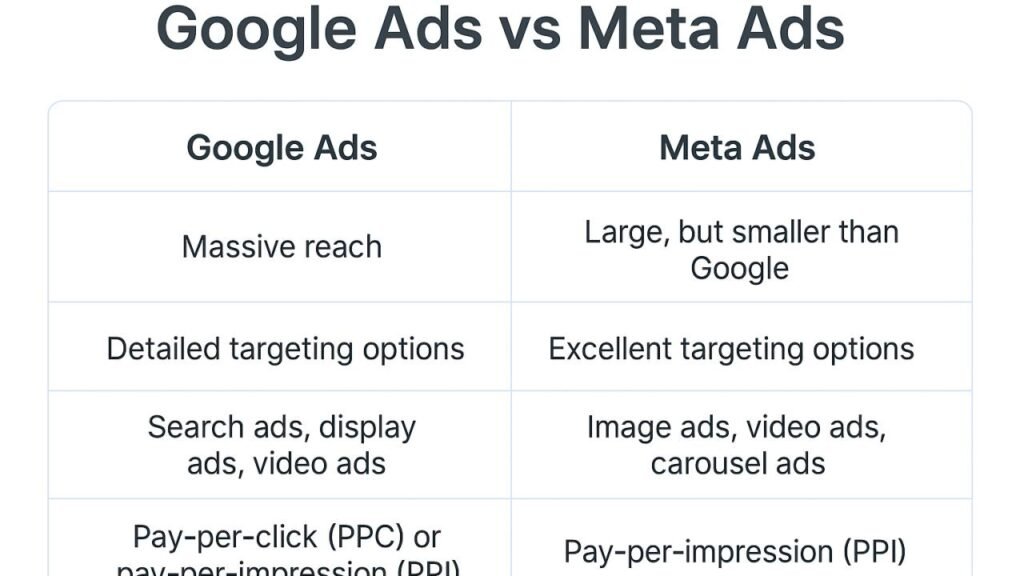
Google Ads vs Meta Ads: Quick Comparison
| Feature | Google Ads | Meta Ads |
|---|---|---|
| Main strength | Search intent | Audience targeting & discovery |
| Best for | High-intent customers | Awareness & demand generation |
| Platforms | Google Search, YouTube, Display, etc. | Facebook, Instagram, etc. |
| Creative focus | Search text, video, shopping, display | Images, videos, Reels, Stories |
| Local services | Excellent | Good |
| Visual products | Good | Excellent |
| E-commerce | Excellent | Excellent |
| Brand awareness | Strong | Strong |
| Lead generation | Excellent | Excellent |
Conclusion
So, Google Ads vs Meta Ads—which is better in 2026?
There is no single winner.
Choose Google Ads when customers are actively searching for your products or services and you want to capture high-intent traffic.
Choose Meta Ads when you want to build awareness, reach specific audiences, showcase visual content, or create demand for your products.
And if your budget and marketing goals allow it, using Google Ads and Meta Ads together can create a stronger advertising strategy.
The real goal isn’t to find the cheapest clicks. It’s to find the platform that delivers the best return on your advertising investment. Track leads, sales, customer acquisition costs, and revenue—and let your data determine where you invest more.